19 October 2026
Bicycle Accident Lawyer Insights on Road Hazard Claims
Presented by @andyqzzi472
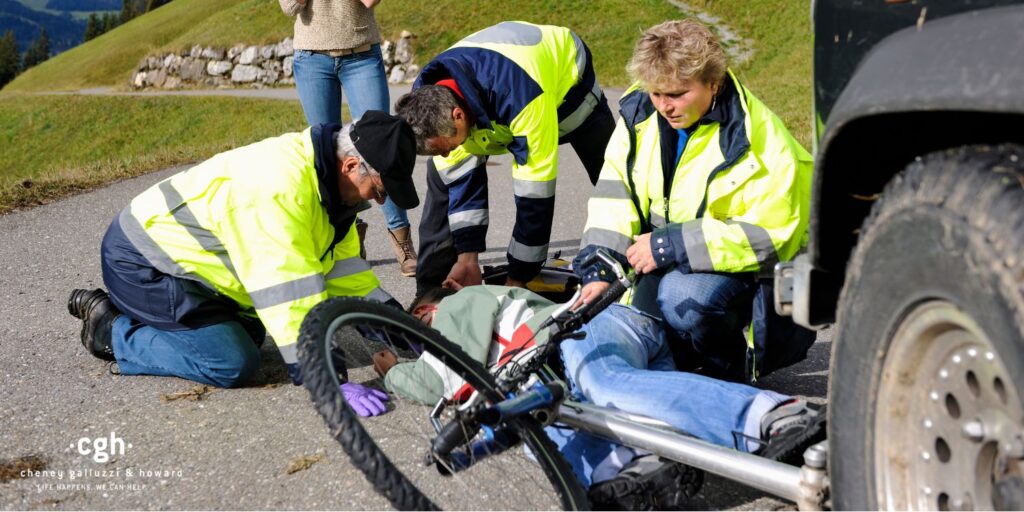
A bicycle crash caused by a road hazard rarely looks straightforward from the outside. A rider hits a pothole, catches a tire in a broken seam, slides on loose gravel, or loses control after striking a sunken utility cover. The injuries can be severe, yet the first reaction from insurers and public agencies is often a version of the same argument: the road was open and obvious, the cyclist should have avoided it, or no one had enough notice to fix it.
That gap between what happened on the pavement and what can be proved in a claim is where these cases are won or lost. A Bicycle Accident Lawyer handling road hazard claims spends less time arguing abstract fault and more time building a grounded record, what the road looked like that day, how long the defect existed, whether others complained, what standards applied to maintenance, and whether the rider had any realistic chance to avoid the danger.
Road hazard claims also sit in a more technical corner of injury law than many people expect. They may involve a city, county, state agency, utility company, private contractor, homeowners’ association, commercial landlord, or some combination of them. Deadlines can be shorter when a public entity is involved. Notice requirements may apply. The evidence can disappear fast because a defect gets patched within days, weather changes the surface, traffic scatters debris, and surveillance footage is overwritten.
That is why these claims reward early, disciplined work and punish delay.
Why road hazard bicycle cases are different from ordinary collision claims
When a cyclist is hit by a driver, the basic theory is usually familiar. One person failed to yield, turned across traffic, opened a car door, followed too closely, or drifted into a bike lane. The conflict is direct.
A road hazard case is more layered. The dangerous condition may have developed over time. Responsibility may be split between the party that created it and the party that failed to fix it. There may be no police citation pointing to fault. Witnesses may remember the fall but not the specific defect that triggered it. In some cases, the rider does not even realize until later that the true cause was not rider error, but an uneven transition, a wheel-grabbing crack, pooled water covering a hole, or road debris left after construction.
Cyclists are uniquely vulnerable to surface defects that drivers barely notice. A depression of an inch or two can destabilize a narrow front tire. Steel plates, railroad tracks, raised reflectors, slick paint markings, and washboard pavement can all create risk, especially during rain or low light. What looks minor to a claims adjuster reviewing photos on a desktop monitor can be catastrophic when encountered downhill, in traffic, or while maneuvering around parked cars.
A Bicycle Accident Lawyer evaluating these cases has to explain not only that the road was defective, but also why that defect was dangerous to a reasonably careful cyclist under real riding conditions. That distinction matters. A municipality may argue that the condition posed little risk to motor vehicles. But roads are used by more than cars, and maintenance duties do not vanish simply because a hazard affects cyclists more sharply than drivers.
The hazards that most often lead to viable claims
Not every bad road condition creates a legal claim. Roads are imperfect. Weather, utility work, and ordinary wear all leave marks. The key question is whether the condition crossed from ordinary roughness into an unreasonably dangerous defect, and whether a responsible party knew or should have known about it.
The strongest claims often involve a hazard with measurable characteristics and a clear mechanism of injury. Potholes are the obvious example, but they are far from the only one. A patched trench that settles below grade can catch a tire just as effectively. Uneven asphalt at the edge of a bike lane may force a sudden swerve. Gravel left after chip sealing or construction can make a turn unrideable. Drain grates with unsafe spacing, offset manhole covers, and broken pavement around utility structures show up repeatedly in case files.
Temporary hazards matter too. Freshly milled pavement without adequate warning, construction plates that shift, slurry seal that becomes slick in damp weather, and debris from landscaping or cargo spills can all support claims, especially when there is evidence the condition persisted long enough for someone to address it.
Context usually decides the value of the evidence. A shallow pothole in a quiet lot may be one thing. The same defect at the bottom of a descent, near an intersection, beside moving traffic, or in a designated bike route is another. The law tends to care about reasonableness, and reasonableness is shaped by where the hazard sat, who used that roadway, what visibility existed, and what safer maintenance steps were available.
Notice is often the battlefield
In many road hazard cases, especially those involving public entities, the dispute centers on notice. It is not enough to show a dangerous condition existed. You often need to show the responsible party created it, knew about it, or should have known about it through reasonable inspection and maintenance.
Actual notice can come from prior complaints, maintenance logs, work orders, emails, police reports, crash histories, or internal inspections. Constructive notice is subtler. If a pothole was large, weathered, and ringed with crumbling edges, that may suggest it developed over time. If multiple residents reported gravel accumulating after every storm, a property manager may not be able to claim surprise. If a utility trench had visibly settled for weeks, the issue becomes whether routine monitoring should have caught it.
This is where experience matters. A good case often emerges from records that do not announce themselves. The rider says, “I hit a bad seam near the intersection.” The legal team then starts pulling public works requests, permit files, contractor records, utility maps, inspection schedules, street resurfacing history, and prior claim logs. Sometimes the answer is hidden in a permit showing a contractor cut the pavement six months earlier and was responsible for restoration. Sometimes a city crew documented the problem but deferred repair. Sometimes several crashes happened in the same corridor and no one connected the pattern.
Notice arguments are also where defendants try to narrow the timeline. They may say the hazard formed the same day from rain, traffic, or a fresh spill. That can be true in some debris cases. It is much less persuasive when photographs show old deterioration, vegetation growing through cracks, faded patching, or repeated settlement around infrastructure.
What a rider should document right away
In a road hazard case, the scene changes faster than people realize. A driver-related crash leaves vehicles, insurance information, and a built-in paper trail. A road defect can vanish overnight under a cold patch or a broom.
If a rider is physically able, or if a companion can help, a few immediate steps make an enormous difference:
- Photograph the exact hazard from several angles, including close-up and wider shots that show lane position, traffic conditions, signage, shadows, and landmarks.
- Capture measurements if possible, using a tape measure, a shoe, a water bottle, or another object for scale if nothing else is available.
- Get names and contact details for witnesses, especially anyone who saw the bicycle strike the hazard or knows the condition had been there before.
- Report the condition promptly to the responsible agency or property owner, and keep a record of the report, including screenshots, ticket numbers, or email confirmations.
- Preserve the bicycle and helmet in post-crash condition until they can be photographed or inspected.
Those steps are simple, but they answer the questions that decide these cases months later. Where exactly was the defect? How large was it? Could a cyclist see it in time? Had it been there long enough to fix? Did the impact pattern on the front wheel match the claimed mechanism? Without those details, a valid injury case can turn into a credibility fight.
The role of comparative fault, and why it is rarely all or nothing
Defendants in bicycle cases often lean hard on comparative fault. They argue the rider was moving too fast, looking elsewhere, riding outside a proper lane position, failing to use lights, or choosing an unsafe line. Sometimes those arguments have some force. Sometimes they are overstated because a lawyer or adjuster is viewing the event with the luxury of hindsight.
Real riding conditions are messy. Cyclists often have to choose between imperfect options. Avoid the pothole and move toward traffic. Hug the curb and risk debris. Cross railroad tracks at a safer angle and leave the painted bike lane. Ride at dusk because work ran late. Brake on a downhill approach and risk losing traction on gravel. The law is supposed to account for those real-world constraints, not pretend the rider had unlimited time and space to react.
A seasoned Bicycle Accident Lawyer does not ignore comparative fault. The better approach is to deal with it directly. Was the rider using front and rear lights? Wearing visible clothing? Descending at a reasonable speed for the road? Familiar with the route? Forced left by parked vehicles or drainage design? Did the defect sit in a place where safe avoidance was unrealistic because of adjacent traffic? Was the hazard obscured by water, glare, leaves, or shadow?
These details do not just soften blame. They often reframe the entire event. A cyclist who “could have avoided it” on an empty street at noon may have had no safe escape at 6:15 p.m. With oncoming traffic, a narrow shoulder, and a drainage rut hidden in shade.
Government claims bring special traps
Many serious road hazard claims involve public streets, and public entity cases come with procedural rules that can derail an otherwise strong claim. In many jurisdictions, a notice of claim or administrative claim must be filed quickly, sometimes within months rather than years. Miss that window, and the case may be barred before the injury lawsuit even starts.
That short deadline catches injured cyclists off guard for understandable reasons. They are focused on surgery, concussion symptoms, missed work, and bike replacement. They may assume the ordinary personal injury statute of limitations controls everything. It often does not.
There is another practical challenge. Governments and their insurers tend to frame road defects as planning choices, maintenance limitations, or trivial conditions. The defense may say the roadway complied with general standards, that the defect did not exceed a threshold level, or that design immunity applies. These are not impossible barriers, but they require careful factual development. The difference between a poor design case and a negligent maintenance case can be decisive.
Suppose a bike lane narrows toward a storm drain where pavement has broken down repeatedly. The city may defend the original design. But if records show recurring deterioration and patch failures, the stronger theory may be that the city allowed a known maintenance problem to persist in an area intended for bicycle travel. That is a very different case from simply arguing the road should have been designed better from the start.
Contractors, utilities, and private owners are often overlooked
Cyclists and even some attorneys initially assume the city owns every road problem. Often it does not. Utility companies and their contractors cut pavement for repairs and restoration. Developers perform street work as part of adjacent projects. Shopping centers control private access roads and parking areas. Property managers may be responsible for drainage, debris cleanup, or maintenance in mixed-use complexes.
In one common pattern, a utility trench is patched after underground work, then settles several inches below grade months later. The municipality may insist the contractor retained responsibility for the restoration period. The contractor may point back to the city’s inspection approval. Sorting out those relationships takes documents, permits, indemnity agreements, and field history.
The same is true for debris cases. A cyclist crashes on gravel near an active project. Was the gravel naturally tracked by traffic, spilled from a truck, left from landscaping, or washed from a construction entrance during rain? Liability may depend on who controlled cleanup, who had inspection duties, and how long the material remained.
This is one reason prompt site investigation matters. A condition that looks like “bad road maintenance” to an injured rider may actually be a contractor-created hazard with a much clearer path to recovery.
How lawyers prove the defect caused the crash
Causation sounds simple until a defense lawyer starts picking at it. There were no skid marks. The rider has no memory of the exact moment of impact. The bike has damage on both sides. A witness saw the fall but not the wheel hit the hole. These are familiar issues.
Proof usually comes from a combination of sources rather than one https://zanelgjt595.bearsfanteamshop.com/bicycle-accident-lawyer-support-for-families-of-injured-riders perfect piece of evidence. Photos of the defect, damage to the wheel or fork, GPS route data, medical records describing the mechanism, witness statements, body position after the fall, and the rider’s immediate comments at the scene can all fit together. In more serious cases, an engineer or reconstruction expert may evaluate whether the dimensions of the hazard were consistent with the loss of control described.
Judgment is important here. Not every case needs experts, and overbuilding a modest claim can make it uneconomical. But when injuries are significant, fractures, traumatic brain injuries, spinal injuries, facial injuries, or surgeries, careful technical proof can change settlement posture dramatically. Defendants who dismiss a claim as “single-bike rider error” often reassess when shown precise measurements, maintenance records, and a coherent explanation of how the hazard destabilized the bicycle.
Damages in these cases are often underestimated
People who do not ride sometimes underestimate the force of a bicycle fall caused by a road defect. They imagine a slow tumble. Many crashes are nothing like that. A front wheel stop can pitch a rider over the bars. Sliding on pavement can strip skin, damage nerves, and fracture wrists, clavicles, hips, or orbital bones. Concussions are common and often harder to value than obvious orthopedic injuries because symptoms linger after scans look normal.
Road rash sounds minor until it requires debridement, dressing changes, scar management, and months of discomfort. A broken collarbone can derail a self-employed contractor, surgeon, mechanic, or designer who needs full shoulder function. A wrist fracture can end a commuter’s ability to work and ride for a season. For competitive or high-mileage recreational cyclists, loss of endurance and confidence has a real quality-of-life component, even if the law values it imperfectly.
The bicycle itself can be a significant loss. Carbon frames, wheelsets, power meters, helmets, custom fittings, and electronic groupsets are expensive, and crash forces that leave a frame looking intact can still make it unsafe. Equipment losses will not drive a major case, but documenting them thoroughly helps present the claim as a concrete, lived event rather than a stack of medical bills.
When small defects still matter
One of the most common misunderstandings in road hazard litigation is the idea that only massive defects count. That is not how bicycle dynamics work. A seam, lip, or depression that would barely register to a car can be enough to deflect a narrow tire or create a loss of traction, especially during cornering or wet conditions.
That said, not every minor irregularity creates liability. Courts and insurers often look at whether the defect was substantial in context. Context includes more than raw depth. The shape matters. A sharp-edged slot is different from a gradual dip. The location matters. A one-inch vertical offset in a bike lane may be more dangerous than a larger depression at the edge of a broad shoulder. The surrounding conditions matter too. Debris, darkness, water, traffic pressure, and lane width all affect whether a condition was unreasonably dangerous.
This is where site photos taken from cyclist eye level are so useful. Overhead shots can flatten the problem. A low-angle image from the rider’s approach often tells the story much better.
Practical signs that a claim may be stronger than it first appears
People often call a lawyer assuming they simply “fell off the bike.” After a detailed conversation, the picture sharpens. There had been complaints about the intersection. A utility patch was failing. Two neighbors said they had nearly crashed there before. The city repaired the defect two days later. A business camera caught the approach. The bike lane marking funneled riders directly into the hazard. Those facts change the case.
A claim tends to strengthen when several of the following are present:
- The hazard can be identified clearly and measured.
- There is some proof the condition existed long enough to provide notice.
- The rider’s path and reaction make sense under actual traffic and visibility conditions.
- Injuries are documented promptly and consistently with the claimed mechanism.
- The responsible entity can be tied to creation, maintenance, or control of the location.
None of these factors is strictly required in every case, but each one reduces the defense’s room to characterize the incident as bad luck or rider inattention.
What clients often get wrong, and why timing matters
The most damaging mistake is waiting. Riders assume they can heal first and sort out liability later. By then the pothole is filled, the work crew is gone, and the camera footage is erased. Another common mistake is giving a casual recorded statement before the scene is documented. A concussed rider may say, “I’m not sure what happened,” which later gets treated as if no defect existed at all.
Some people also underestimate the importance of their equipment. A damaged front rim, torn sidewall, or scraped pedal can help confirm the bike’s angle and point of impact. Do not repair or discard the bike too soon. The same goes for helmets, clothing, and lights.
There is a subtler issue too. Cyclists often minimize their injuries because they are used to pushing through discomfort. That stoicism can hurt both health and the legal claim. Early records matter. If dizziness, headaches, numbness, shoulder weakness, visual changes, or sleep disruption appear after the crash, they should be reported and evaluated.
The lawyer’s job is part investigation, part translation
Road hazard bicycle claims live at the intersection of engineering, maintenance practice, and injury law. The facts have to be translated from a rider’s lived experience into a form that insurers, agencies, judges, and juries can understand.
That means showing not only that a cyclist got hurt, but why the crash was a foreseeable result of a dangerous condition. It means identifying the right defendant, preserving evidence before it disappears, handling government notice requirements, and resisting the easy defense that every solo bicycle fall is personal error.
For injured riders, the value of a Bicycle Accident Lawyer in these claims is rarely about rhetoric. It is about knowing where to look, which records to demand, how roadway defects behave over time, and how to present the scene as it actually existed, not as a cleaned-up version described months later in a claims letter.
When road conditions put a rider on the ground, the pavement usually keeps its secrets unless someone moves quickly and asks the right questions. That is what makes these cases challenging, and why the strongest ones are built from detail rather than assumption.
CGH Injury Lawyers
2701 Lawrence St Suite 201
Denver, CO 80205, United States
Phone: +1 720-669-8062
FAQ About Bicycle Accident Lawyer
Who is at fault if a car hits a bicycle?
Fault depends on the evidence and the traffic rules that applied to the collision. A driver, cyclist, or another party may share responsibility. Police reports, witness accounts, video, and the physical evidence can help establish what happened. A collision with a car does not automatically determine legal fault.
Can you sue someone for hitting you on a bike?
You may have a claim when another person's negligent conduct causes your injuries and losses. The available evidence, applicable deadlines, insurance coverage, and any shared fault affect your options. A lawyer can review the circumstances and explain whether an insurance claim or lawsuit is appropriate; compensation is not guaranteed.
What percentage does an injury lawyer usually take?
There is no single percentage that applies to every injury case. Many lawyers use a contingency fee based on a share of the recovery, with the terms stated in a written agreement. Ask how the percentage is calculated, whether it changes during litigation, and how case expenses are handled before signing.